
Quick Summary
Genuine 24K gold leaf art does not fade or oxidize on its own, since pure gold is chemically stable. The real risks are lower-karat or imitation leaf, which can tarnish, plus sunlight, humidity and rough handling, which shorten the life of any gold leaf art.
- 24K genuine gold leaf is essentially pure gold and does not oxidize or tarnish on its own.
- Lower-karat and imitation leaf can darken because silver, copper or base metals react with air and moisture.
- Direct sunlight dulls velvet and frame finishes, so keep pieces out of strong light.
- Avoid humid rooms, stoves, fireplaces and steamy bathrooms, which affect adhesion and encourage spotting.
- Seal imitation or lower-karat leaf, and test any clear coat on a sample board before applying it.
Table of Contents
- What Actually Happens to Gold Leaf Over Time
- How Long Does Gold Leafing Last and What Shortens It
- Will Gold Leaf Art Fade Over Time on Canvas?
- Caring for Your Gold Leaf Piece at Home
- Frequently Asked Questions
What Actually Happens to Gold Leaf Over Time
Gold leaf does not fade the way paint or printed ink does. Pure gold is one of the most chemically stable metals, so 24K gold leaf does not oxidize, rust or lose its shine on its own. What changes over time is the surface around the gold and the materials beneath it.

Fading means the art's color washes out, usually from the paint or velvet background. Tarnishing is a surface change, most often seen on leaf that is not pure gold.
The more useful question is which kind of leaf you own, since karat and alloy composition set the realistic ceiling on longevity. The table below is a practical guide, not a guarantee.
| Leaf type | What it is | Expected behavior over time | Practical longevity expectation |
|---|---|---|---|
| 24K genuine gold leaf | Essentially pure gold, roughly 99.9 percent | Chemically inert; does not oxidize or tarnish on its own | Decades with stable display and gentle handling |
| 22K-23K gold leaf | Gold with a small alloy fraction | Very slow surface change; alloy fraction can dull slightly | Many years to decades; inspect periodically |
| 12K-18K gold leaf | Gold plus silver, copper or other metals | Alloy metals can react with air and moisture, producing a darker or warmer cast | Years, with visible change possible in humid or polluted rooms |
| Imitation gold leaf | Coated brass, copper, aluminum or foil | Base metal can oxidize, discolor or darken; coating quality drives results | Months to a few years unsealed; longer when properly sealed |
| Variegated and composition leaf | Treated metal foil with intentional color | Color shift is part of the look and can continue to develop | Short to medium term; appearance is intentionally unstable |
Silver in lower-karat leaf reacts with sulfur in the air and darkens; copper warms and can turn greenish in damp conditions; aluminum-based imitation leaf dulls and scuffs. Pure gold has none of these vulnerabilities, which is why conservators treat 24K leaf as stable and worry instead about the adhesive, ground and coating.
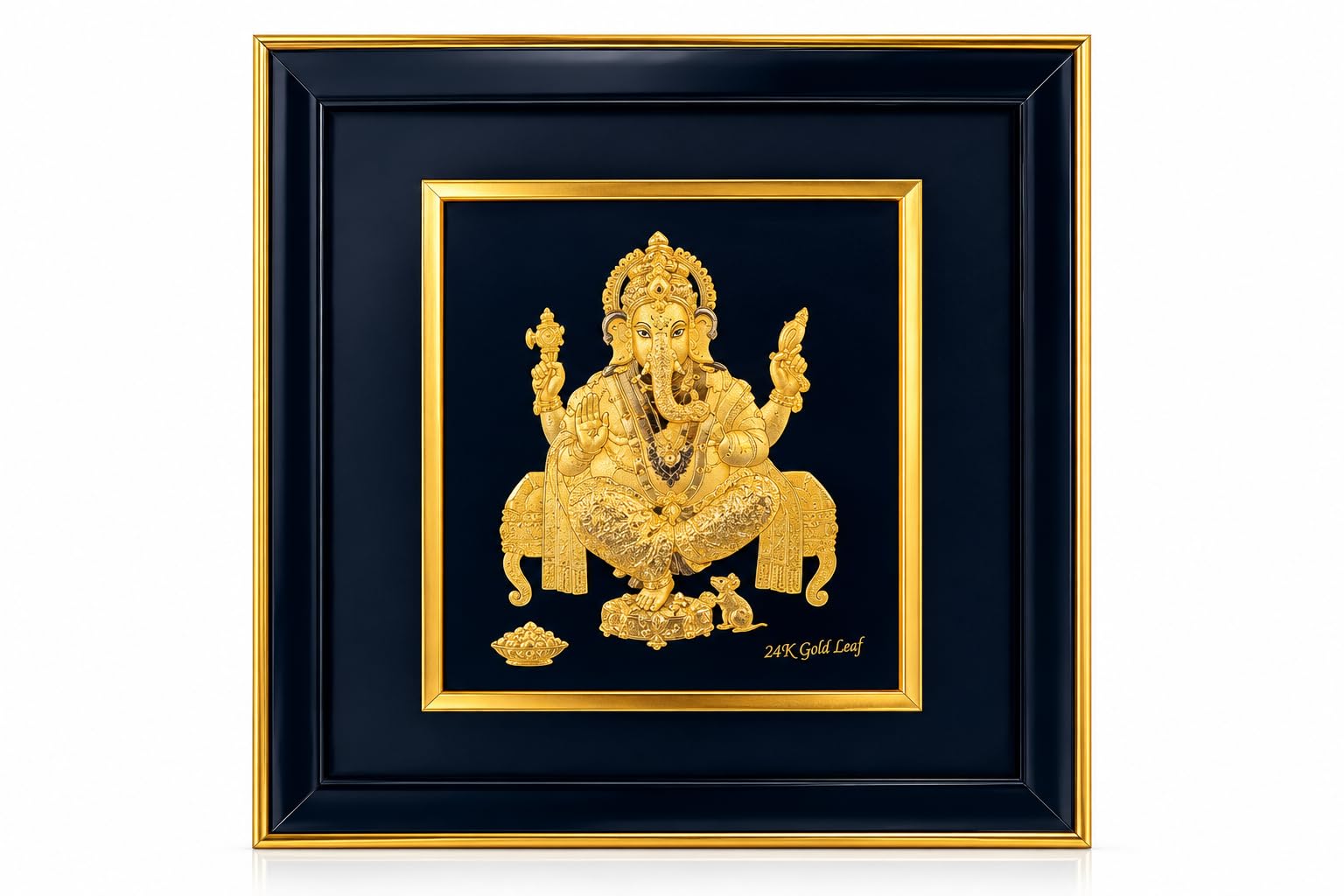
Most long-term change comes from light, humidity and how the piece is hung.
How Long Does Gold Leafing Last and What Shortens It
Gold leafing is generally durable when kept in a stable environment. Longevity depends less on the gold than on the conditions around it.
Several factors can shorten that life:
- Direct sunlight: dulls velvet and frame finishes
- High humidity: affects adhesion and encourages spotting
- Dust and grime: dulls the shine
- Rough handling: pressure or friction can lift or scuff delicate leaf
Avoid hanging a piece above a stove, fireplace or steamy bathroom; heat and moisture work against the surface.
Will Gold Leaf Art Fade Over Time on Canvas?
Gold leaf art on canvas holds up well, but the canvas is the part to watch. Canvas flexes with temperature and humidity changes, which can stress the leaf. Pieces with a protective varnish or clear coat resist this better than unsealed work.
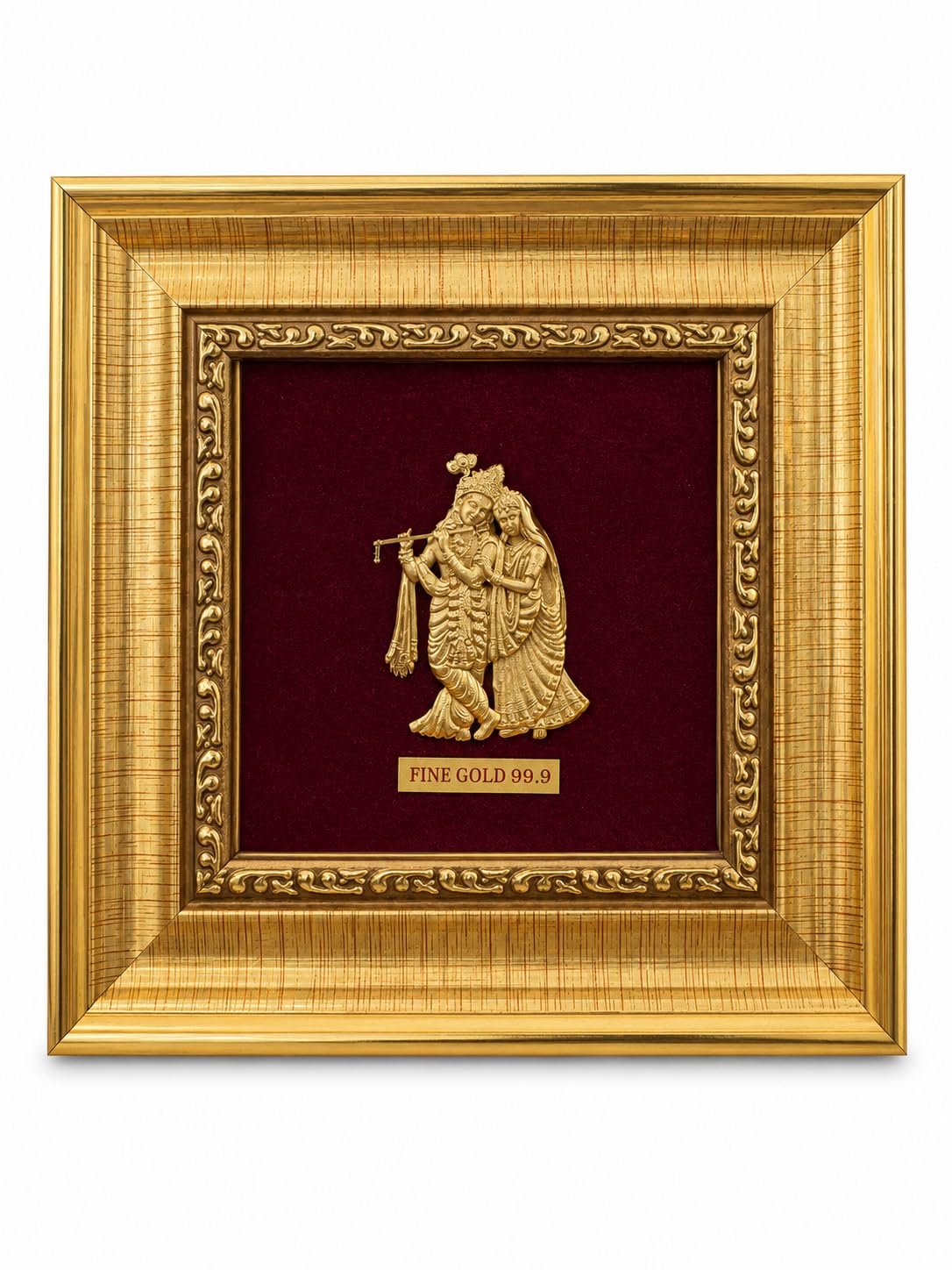
A color shift after several years is usually the clear coat or surrounding paint yellowing, not the gold. Check every few months for lifting edges or cloudy patches.
Sealing is the decision that most affects how a canvas piece ages.
When sealing is necessary:
- Imitation or composition leaf, since the base metal oxidizes without a barrier
- Lower-karat leaf containing silver or copper
- Pieces in humid, coastal or polluted rooms
- Mixed-media work where the leaf sits next to paint, ink or adhesive that can off-gas
- Handled objects such as frames, boxes or panels
When sealing may be unnecessary:
- 24K genuine gold leaf on a stable panel in a dry, low-traffic room
- Pieces where the collector values the raw leaf surface and accepts careful handling
- Work headed for museum-style framing behind glass
How to choose a compatible coating:
- Water-based acrylic varnishes are the usual starting point for canvas; they flex and stay clear longer than many solvent finishes.
- Solvent-based varnishes are more durable but prone to yellowing and can re-wet some adhesives.
- Avoid shellac and oil-modified finishes over imitation leaf unless tested; they can warm or darken the metal.
- Always test on a sample board matching your leaf, adhesive and ground before coating.
Watch out: a clear coat that looks invisible on a test card can still shift the appearance of variegated or imitation leaf. Judge the sample under the same lighting as the final display spot and let it fully cure.
Surface matters as much as coating. On canvas, thin coats that follow the weave beat heavy coats that pool. On wood panels, seal the back and edges as well as the face to slow moisture movement. On paper, spray rather than brush to avoid lifting the leaf. On glass and resin, the leaf is usually encapsulated, so avoid trapped moisture and bubbles.
Watch out: do not clean a canvas piece with water or household cleaners. Moisture can loosen the leaf, and harsh chemicals can dull the finish.
Caring for Your Gold Leaf Piece at Home
Keep the piece out of direct sun and away from humid rooms, and avoid touching the gold surface with bare fingers, since skin oils can leave marks.
For a puja room or office display, place the piece on a stable wall where it will not be bumped. If unsure how to clean or store your piece, contact us at sudeep@praneerllc.com.
Last Updated: November 18, 2026
Frequently Asked Questions
How long does gold leafing last?
Genuine gold leaf is generally durable, and 24k gold leaf is the least reactive to tarnish because it is nearly pure gold. Lifespan depends mostly on the surface it sits on, how it was sealed, and where it hangs. Pieces kept out of direct sunlight, away from heat and humidity, and protected from handling usually hold their color far longer than pieces exposed to those conditions. A framed piece behind glass in a stable indoor environment is the most likely to keep its finish over the long term.
Will gold leaf art fade over time on canvas?
Gold itself does not fade, but gold leaf on canvas can change in appearance. The canvas and adhesive can flex, age, or absorb moisture, which may cause small lifting or dulling around the edges. Alloys such as copper or silver in lower-karat leaf can tarnish, while 24k gold leaf stays bright. Sealing with a suitable varnish or clear coat and framing the canvas behind glass helps protect the leaf and the surface beneath it.
Should you seal gold leaf on a painting?
Sealing is recommended for most gold leaf artwork, especially lower-karat or alloy leaf and pieces that hang in kitchens, bathrooms, or sunny rooms. A clear coat or varnish adds a protective layer against air, moisture, and handling. Test any sealant on a small hidden area first, because some finishes can slightly change the sheen or cause discoloration.
