
Quick Summary
Yes, lakshmi art is worth buying for Diwali when the piece will be displayed for years or given as a gift. Gold-foil framed prints suit most buyers because the metallic detail reads well in lamplight. Free printable images work for temporary displays but often lose clarity when enlarged.
- Gold-foil framed prints read best in low light, which suits Diwali displays near diyas.
- Printed reproductions can look identical to foil pieces online, so ask whether the gold is real foil.
- Check that the lotus petals, elephants and coins are clearly rendered in any piece you buy.
- Place devotional Lakshmi art at or above eye level in a puja area, never in a bathroom or at floor level.
- Test free printable images at your intended frame size before committing, since they can pixelate.
Table of Contents
- Why Goddess Lakshmi Art Is Chosen for Diwali
- Traditional Lakshmi Art Styles and How They Differ
- Lakshmi Iconography: Lotus, Elephants and Gold Symbols
- Praneer's Framed Goddess Lakshmi Wall Art Compared
- Choosing Lakshmi Art for Your Puja Room, Office or Gift
- Free Goddess Lakshmi Art for Diwali: What to Know Before You Download
- Choosing Your Diwali Lakshmi Piece Today
- Frequently Asked Questions
Why Goddess Lakshmi Art Is Chosen for Diwali
Lakshmi is widely honored during Diwali as the goddess of wealth, prosperity and good fortune, which is why her image is so common in homes during the festival. Many households hang or set out a depiction of her for the puja, then keep it on display through the season. The choice is often personal rather than strictly ritual: some families want a devotional focal point, while others simply want a visually rich piece that matches the lights, sweets and decorations of the holiday.
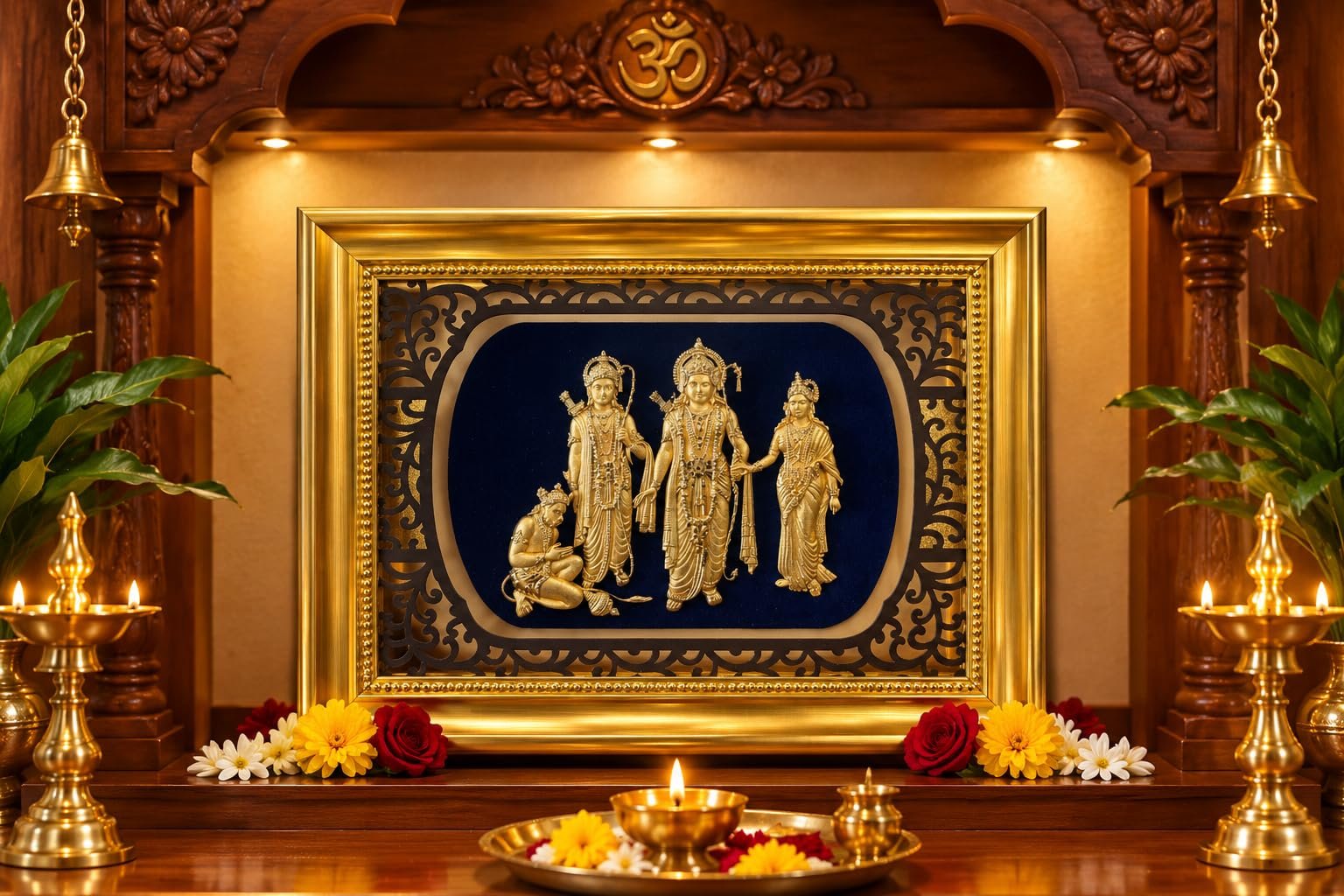
A buyer might be setting up a puja room, or they might be buying a gift for a housewarming or wedding in a Hindu family. Both want the art to look intentional and last beyond one festival season, which shapes what is worth paying for.
Traditional Lakshmi Art Styles and How They Differ
Lakshmi art is not one product category. A hand-painted canvas, a gold-foil framed print, a floor rangoli, a small sculpture, and a digital illustration all depict the same goddess, but they differ sharply in appearance, effort, materials, and where they belong in a home. Most buyers compare only price and size; the more useful comparison is format against purpose.
Here is how the main formats compare for a typical Diwali buyer:
| Format | Appearance | Effort and Skill | Materials | Best Use |
|---|---|---|---|---|
| Hand-painted traditional | Matte painted texture, visible brushwork, slight variation between pieces | High, days of work for an experienced artist; years of practice to reach display quality | Canvas or paper, natural or acrylic pigments, brushes, fixative | Collectors, heirloom pieces, one-of-a-kind gifts |
| Gold-foil framed print | Reflective gold detail that catches lamplight; crisp lines under glass | Low for the buyer, the piece arrives finished | Foil-stamped or foil-applied print, frame, glass or acrylic glazing | Puja rooms, entryways, Diwali gifts |
| Fine-gold framed print | Warm metallic sheen, slightly softer than foil | Low for the buyer | Fine-gold-toned print, frame, velvet or paper backing | Living spaces, offices, households honoring Vishnu and Lakshmi together |
| Printed reproduction | Flat, paper-based, no metal detail | Low | Paper or card stock, standard frame | Budget decor, temporary displays, classroom use |
| Rangoli | Ephemeral, floor-based, colored powder or flower petals | Medium to high, freehand symmetry takes practice | Colored powder, rice flour, flower petals, small diyas | Entryways and thresholds during the festival |
| Sculpture (murti) | Three-dimensional, often painted clay, brass, or marble | High for quality pieces; low for molded resin | Clay, brass, marble, resin, paint | Puja altars and shrines |
| Digital illustration | Screen-based, scalable, easy to share | Low to medium depending on the artist | Drawing software, tablet, licensed fonts and brushes | Digital greeting cards, social posts, printed cards |
A few practical differences matter more than the table suggests. Hand-painted works vary from piece to piece, which is part of their appeal. Gold-foil pieces read best in low light, which is why they suit Diwali displays near diyas and string lights. Rangoli is temporary by design, it is swept away after the festival, so it fills a different role than framed art that stays on the wall year-round. Sculptures belong on an altar rather than a wall, and they need to be sized to the altar, not the room.
Watch out: a printed reproduction photographed under bright studio lighting can look nearly identical to a foil piece online. Ask whether the metallic detail is actual foil or a printed gold color, because the two look very different in a dim room.
For buyers comparing finished wall pieces, the gold-foil and fine-gold categories are where most Diwali purchases land, because the metallic finish reads well in low light and the framing is already done. A printed reproduction can look fine from across a room but often loses clarity up close, and a hand-painted work costs more because the effort is real. The right choice depends less on which format is 'best' and more on whether the piece is for worship, decoration, a gift, or a single evening.
Lakshmi Iconography: Lotus, Elephants and Gold Symbols
Most traditional depictions of Lakshmi include a small set of recurring symbols, and knowing what they mean helps you judge whether a piece is carefully made and whether it is appropriate for the setting you have in mind. The context is what separates a devotional piece from a decorative one.
The lotus. Lakshmi is commonly shown seated or standing on a lotus, which represents purity and rising above difficulty. In a well-made piece, the petals are distinct and evenly spaced rather than blurred into a single shape. A lotus that reads clearly at arm's length usually signals more careful work than one that only resolves from across the room.
The elephants. Flanking elephants often appear beside her, traditionally associated with abundance and royal power. Check that the elephants are symmetrical and that their raised trunks and vessels are legible; in cheaper prints the elephants often merge into the background pattern.
Gold coins and pots. Coins flowing from her hand or a pot at her feet signal prosperity. These are the details most likely to be simplified in low-cost reproductions, so they are a useful quality check.
The color gold. Gold itself carries the meaning of prosperity, which is why gold foil, gold leaf, and gold-toned frames are so common for Diwali.
The mantra. Some pieces include the mantra 'Om Shreem Shri Lakshmiye Namah' in lettering. If a piece includes text, read it carefully before display, a misspelled or garbled mantra undermines the piece for devotional use even if the artwork is otherwise fine.
Vishnu and Lakshmi together. Some households honor Vishnu alongside Lakshmi, and pieces showing the two deities together suit those homes. If your family tradition centers on Lakshmi alone, a solo depiction is the more conventional choice.
Placement deserves the same care as the artwork. A puja area is the most traditional setting, and a piece placed there should be at or slightly above eye level when seated, kept clean, and not used as general wall decor. An entryway piece is common for Diwali because it greets guests, but it should not face a bathroom door or be crowded by shoes and clutter.
Watch out: placing a devotional Lakshmi piece in a bathroom, above a stove, or at floor level is considered disrespectful in most Hindu households. If the piece is a gift, ask the recipient where they intend to display it rather than assuming.
When you evaluate a piece, check whether these symbols are rendered clearly and whether the text, if any, is correct. Crisp lotus petals, well-defined elephants, and legible lettering usually indicate more careful craftsmanship than a piece where the figures blur into the background. This matters more for devotional use than for decor alone, because the symbols carry the meaning.
Praneer's Framed Goddess Lakshmi Wall Art Compared
Praneer offers several framed Lakshmi pieces at different sizes and finishes. Here is what each one is built for, so you can match the piece to your space.
10 x 8 Goddess Lakshmi Framed Art with 24K Gold Foil ($229.00) features Lakshmi seated on a lotus with flanking elephants, set in a black frame with a gold inner border. It arrives in a gift box, which makes it a practical choice for a housewarming or Diwali present. [10 x 8 Goddess Lakshmi Framed Art with 24K Gold Foil | praneerllc.com]
14x 11 Goddess Lakshmi 24K Gold Foil Framed Wall Art ($309.00) is the largest option in the lineup. It includes the mantra "Om Shreem Shri Lakshmiye Namah" in gold lettering on a crimson velvet background and comes with both a wall hanger and a tabletop stand. It suits a dedicated puja wall or a prominent living room spot. [14x 11 Goddess Lakshmi 24K Gold Foil Framed Wall Art | praneerllc.com]
11 x 9 Vishnu Lakshmi 24K Fine Gold Framed Wall Art ($249.00) shows Lord Vishnu and Goddess Lakshmi together on a lotus base against red velvet. It suits households that honor both deities. [11 x 9 Vishnu Lakshmi 24K Fine Gold Framed Wall Art | praneerllc.com]
Praneer framed Lakshmi art prices
Choosing Lakshmi Art for Your Puja Room, Office or Gift
The right piece depends on where it will live. For a compact puja shelf or a small wall, the smaller 5 x 5 option works well. The 5 x 5 Goddess Lakshmi 24K Fine Gold Framed Wall Art on red velvet is priced at $129.00 and suits a corner of a bedroom or a modest prayer space. [5 x 5 Goddess Lakshmi 24K Fine Gold Framed Wall Art, Red Velvet | praneerllc.com]
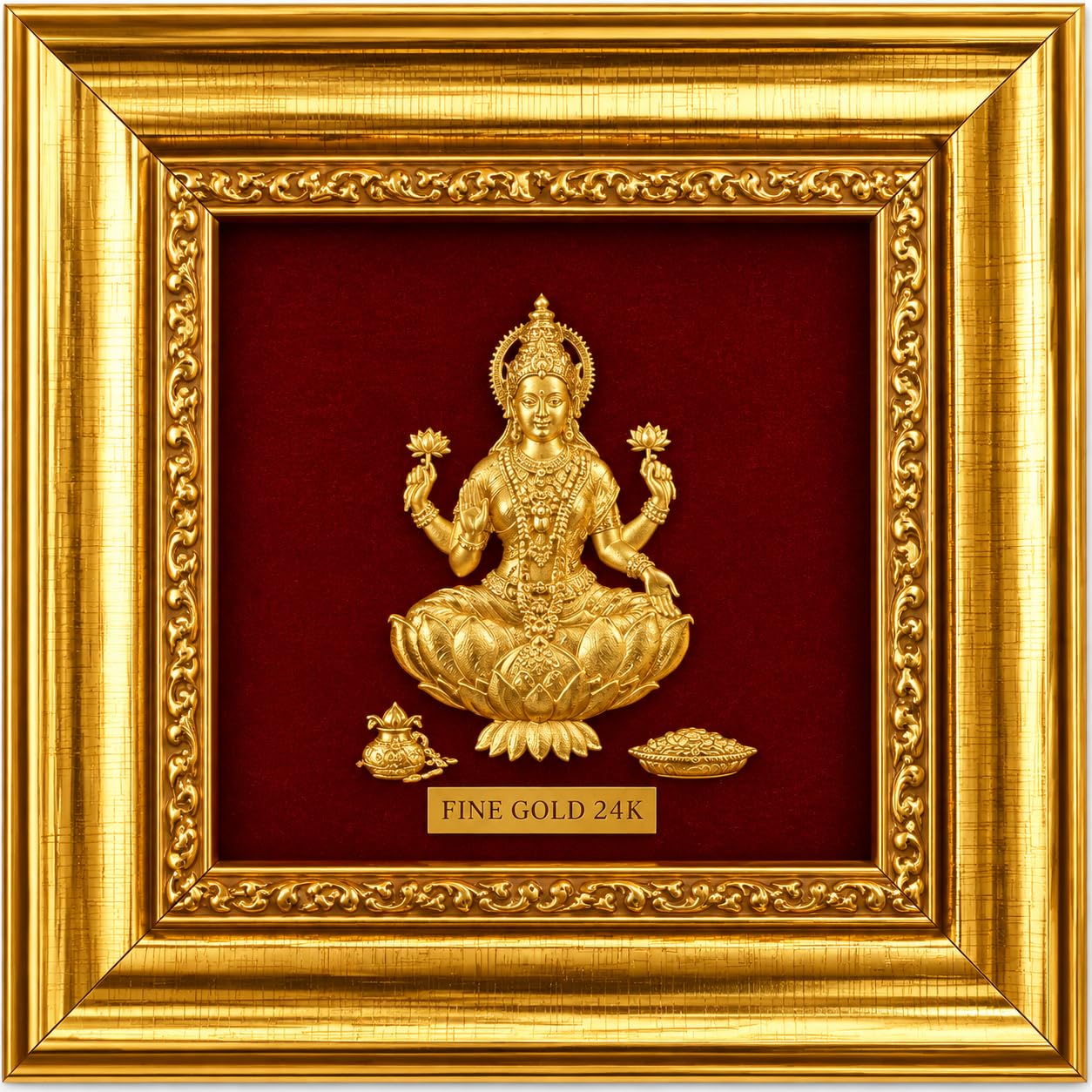
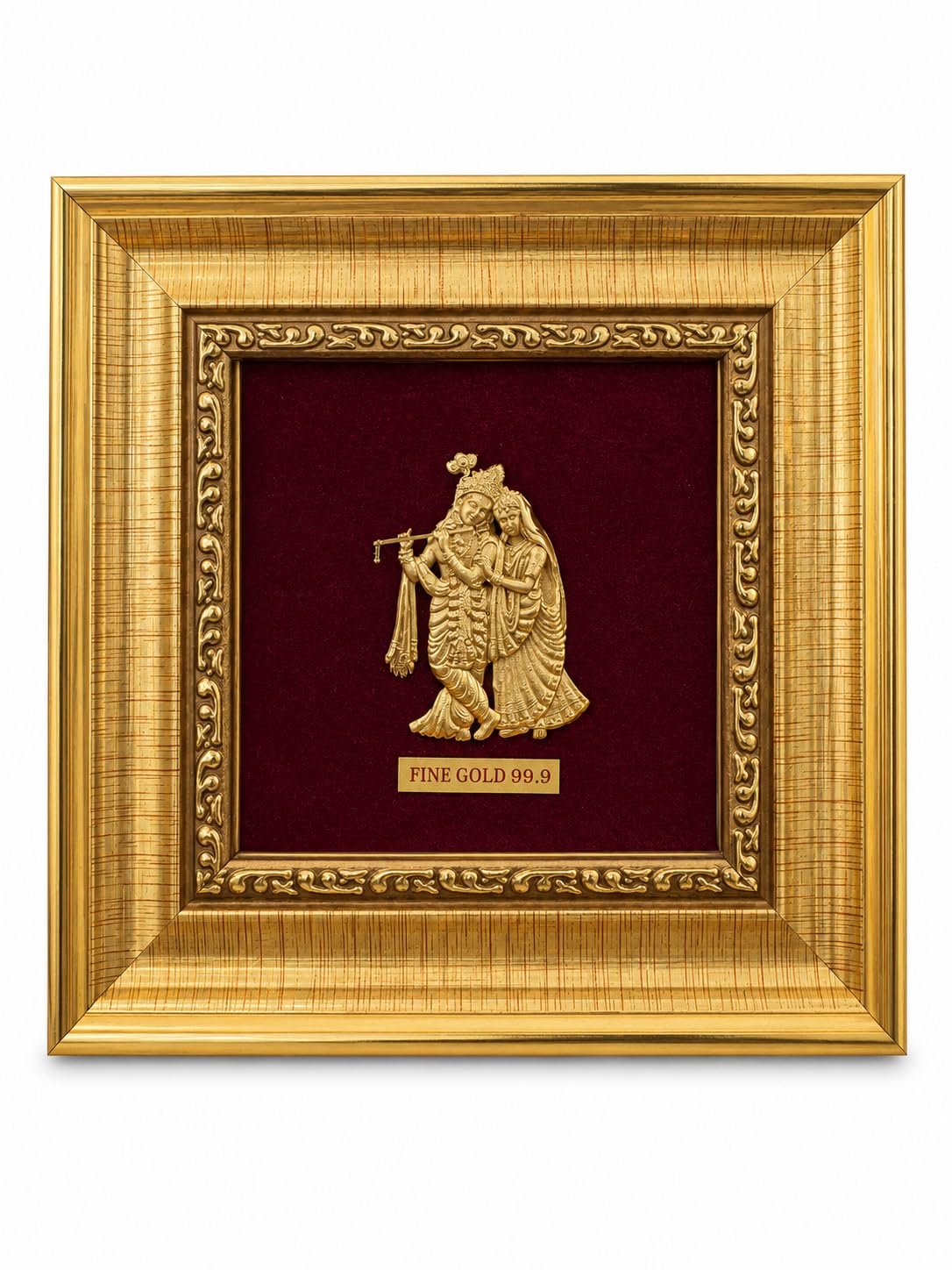
For an office, keep the color palette in mind. Red velvet and gold read as ceremonial, so a single framed piece often works better than several. Learn how to care for red velvet religious wall art For a gift, a framed piece with a gift box is easier to present than an unpackaged print.
Free Goddess Lakshmi Art for Diwali: What to Know Before You Download
Free printable Lakshmi images are easy to find, and they can be a reasonable choice for a temporary display. Before you download one, check the source and the license. Many free images are reproduced without the artist's permission, and some sites bundle them with intrusive ads or low-resolution files that look poor when printed at frame size.
If you plan to frame a free image, test the print at your intended size first. A file that looks sharp on a screen can pixelate when enlarged. For a piece you want to keep for years, a finished framed work usually gives better results than a home print.
Choosing Your Diwali Lakshmi Piece Today
Start with three questions: where the piece will hang, how long you want it to last, and whether it is for personal worship or a gift. A small gold-foil piece suits a shelf or a gift. A larger piece with gold detailing and velvet backing suits a permanent display. Compare the finish, the size and the included packaging before you decide.
Praneer's framed Lakshmi pieces are priced from $129.00 to $309.00, with the 10 x 8 gold-foil option at $229.00 and the 11 x 9 Vishnu Lakshmi piece at $249.00. Pick the one that matches your space and your purpose, and order early enough to have it in place before the festival begins.
Frequently Asked Questions
What should you offer Goddess Lakshmi on Diwali?
Devotees commonly offer flowers, especially lotus or marigold, sweets, fruit, and lit diyas. Many families also place coins or a small gold or silver item near the image as a symbol of prosperity. Keep the offerings clean and fresh, and place them on a dedicated puja shelf in front of the Lakshmi artwork before lighting the lamps for the evening worship.
Is framed Goddess Lakshmi art a suitable housewarming gift?
Yes. A framed Goddess Lakshmi piece is widely given at housewarmings because it signals prosperity and good fortune for the new home. Praneer's Goddess Lakshmi framed pieces, priced from $129.00 for the 5 x 5 size to $309.00 for the 14 x 11 size, are presented as gift-worthy.
How do I choose Goddess Lakshmi art for Diwali?
Start with the space. A puja room suits a richer, more ornate piece with gold foil and a velvet background, while an office may call for a smaller frame in a neutral setting. Check the frame dimensions before ordering, since Praneer lists sizes as outer frame measurements. Decide whether you want a wall-hung or tabletop display, and confirm the artwork style matches the devotional or decorative role you have in mind.
What styles of Goddess Lakshmi art are popular for Diwali?
Popular styles include gold-foil framed artwork on velvet, traditional South Indian Tanjore-style paintings with raised gold, and folk forms such as Madhubani drawings. Gold-foil framed pieces suit homes that want a richer focal point, while folk or hand-drawn styles suit families who prefer a simpler, handmade look for festival decoration.
