
Quick Summary
The best kalakirtiart alternative for gold leaf art depends on what you need. Genuine 24K gold leaf offers lasting depth but costs the most, while brass leaf, copper leaf, or gold-colored foil give a convincing look at lower cost, provided they are sealed to prevent tarnish.
- Genuine gold leaf does not tarnish, while brass and copper leaf do unless sealed properly.
- Brass leaf is affordable and reads as gold, but it needs a sealer to stay bright.
- Gold-colored foil is the cheapest and easiest to apply, but it can look artificial up close.
- Test any material on a scrap of your actual surface before committing to a full piece.
- Always seal imitation leaf after applying it, because skipping this step is the most common mistake.
Table of Contents
- Why Readers Look for a Kalakirtiart Alternative for Gold Leaf Art
- Real Gold Leaf vs Imitation Options: What Actually Differs
- Side-by-Side Comparison of Gold Leaf Alternatives
- How to Choose by Surface, Medium, and Budget
- Gold Leaf Art Ideas Using Alternatives and Praneer Pieces
- How to Use Gold Leaf on Acrylic Painting, Step by Step
- Choosing Your Gold Leaf Piece for Your Space
- Frequently Asked Questions
Why Readers Look for a Kalakirtiart Alternative for Gold Leaf Art
Last Updated: November 14, 2026
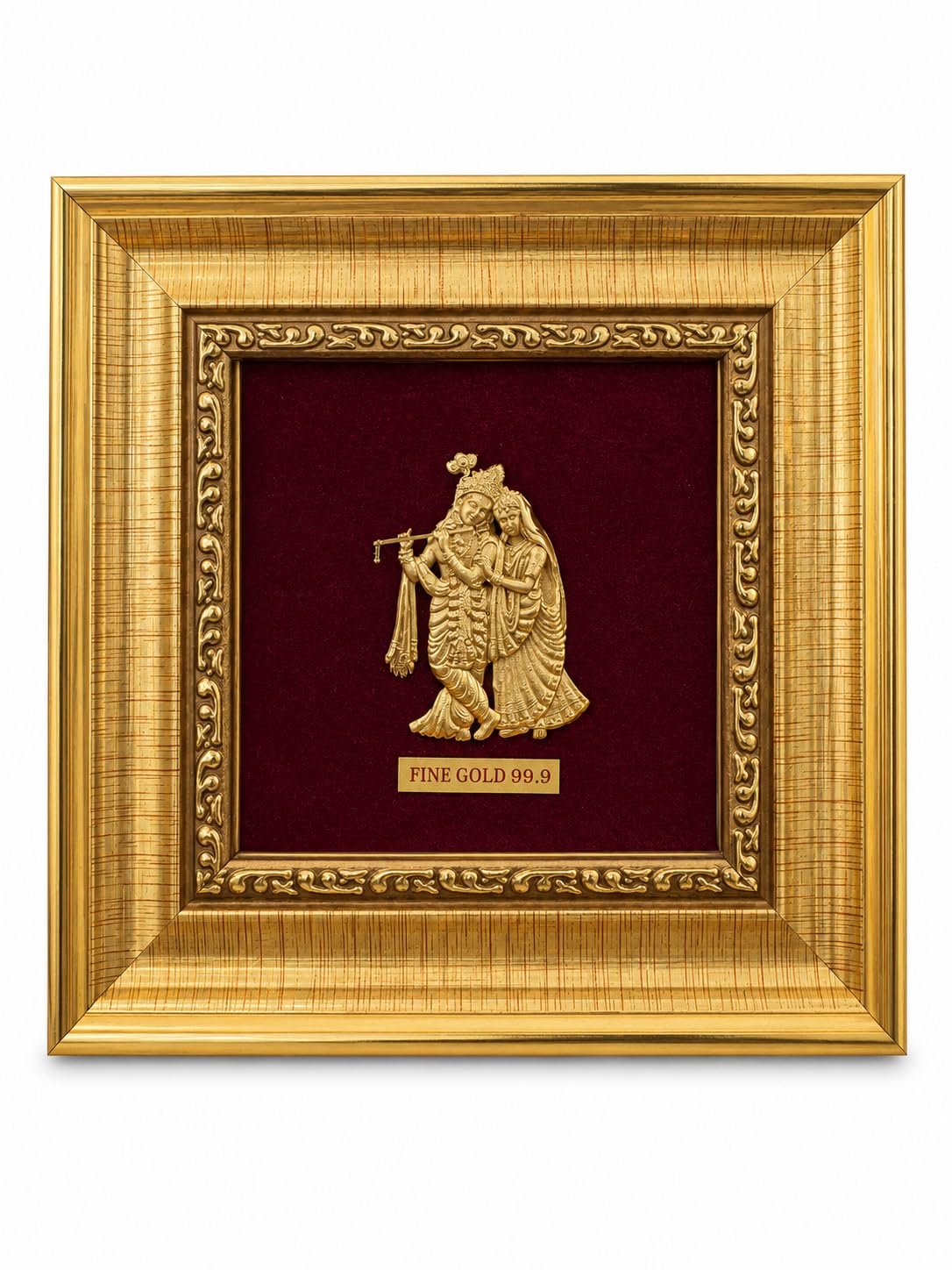
Gold leaf art has a reputation for being expensive, delicate, and hard to get right. Many collectors and home decorators start searching for a kalakirtiart alternative for gold leaf art because they want the shimmer without the uncertainty. Buyers often ask: Is the gold real? Will it look the same in person as it does online? Is it worth the price?
Those are fair questions. Gold leaf art is a serious purchase, especially for a puja room, an office, or a housewarming gift. This guide compares the main options, explains what actually differs between them, and shows how to choose by surface, medium, and budget.
Our aim is an honest comparison, not a sales pitch. Some readers need genuine 24K gold, and others are better served by brass leaf or foil. The right answer depends on the piece, the space, and how much the gold needs to do.
Real Gold Leaf vs Imitation Options: What Actually Differs
Real gold leaf is pure gold beaten into sheets thin enough to be translucent. Imitation options use brass, copper, zinc, or a metallic foil coating to create a similar look at a lower cost.
Genuine gold does not tarnish. Brass and copper leaf do, and they can darken or oxidize over time unless sealed properly. Foil can also lift or flake if the adhesive or varnish fails. This is why the sealing step matters more for imitations than for real gold.
Appearance is the other big difference. Real gold has a warm, deep glow that shifts with the light. Imitations often look brighter and flatter, especially under direct lamps. Neither is wrong, but a buyer who wants the depth of real gold will notice the gap.
Genuine gold is generally the longer-lasting choice for a piece kept for decades. For decorative work, a practice canvas, or a large area where cost matters, imitation leaf can deliver a convincing result.
Side-by-Side Comparison of Gold Leaf Alternatives
The table below compares the most common options on the factors that actually change a buying decision: appearance, tarnish behavior, relative cost, application difficulty, and durability.
| Option | Appearance | Tarnish Resistance | Relative Cost | Application Difficulty | Durability | Best For |
|---|---|---|---|---|---|---|
| Genuine 24K gold leaf | Warm, deep, luminous; shifts with light | Does not tarnish | Highest | High (static, tears easily) | Decades with light handling | Sacred and heirloom pieces |
| Brass leaf | Bright yellow, slightly warmer than foil | Tarnishes without sealing | Low to moderate | Moderate | Years if sealed; weeks if not | Decorative work, larger areas |
| Copper leaf | Reddish, antique look | Tarnishes and patinas | Low | Moderate | Changes color over time by design | Rustic or aged effects |
| Gold-colored foil | Bright, uniform, shiny | Good when sealed | Low | Low | Depends on adhesive and top coat | Practice work, budget projects |
| Transfer foil | Flat, consistent sheen | Depends on the top coat | Low | Low | Depends on heat/pressure and sealer | Quick, even coverage on flat surfaces |
What the comparison does not show. Cost per square inch varies more by sheet size than by material.
Pros and cons of each option:
- Genuine gold leaf. Pros: lasting color, true depth, no tarnish. Cons: highest cost, delicate to handle, requires skill to apply cleanly, and double-leafing for full opacity adds cost.
- Brass leaf. Pros: affordable, reads as gold, easy to find. Cons: tarnishes, needs sealing, color can look greenish if neglected, and overlaps show more than with gold.
- Copper leaf. Pros: attractive antique finish, low cost. Cons: changes color over time, reads more red than gold, and the patina may not suit every palette.
- Gold-colored foil. Pros: cheap, quick to apply, very bright. Cons: looks artificial up close, can peel if the adhesive is weak, and creases are hard to remove.
- Transfer foil. Pros: fast coverage on flat surfaces, forgiving for beginners. Cons: the look depends heavily on the sealer used, and it does not conform well to deep texture.
Application and troubleshooting by option. With genuine gold and brass leaf, the usual failure is over-handling: the sheet wrinkles, then tears when brushed flat. Lay it with a soft brush and accept small overlaps.
Watch out: Do not judge brightness under a single warm lamp. Brass and foil can look closer to gold under warm light than they do in daylight, so compare samples under the light where the piece will actually hang.
A note on the named-product intent. Readers searching for a kalakirtiart alternative are usually comparing a specific source against general supplies, not gold leaf in the abstract.
How to Choose by Surface, Medium, and Budget
Most failed leaf projects fail at the surface stage, not the gilding stage. The guide below matches each common surface and medium to the alternative most likely to hold up, with the cautions that matter.
By surface:
- Canvas. Primed canvas takes leaf and foil well, but the weave shows through thin leaf. For a smooth result, sand the primed surface or apply a rigid panel over the canvas. Brass leaf is a good middle ground; foil is more forgiving on textured canvas.
- Paper. Smooth, sized paper is the easiest surface for beginners. Thin paper can cockle when wet size is applied, so test a corner first. Transfer foil works well on smooth paper because it needs pressure rather than moisture.
- Wood. Sealed wood is a reliable base. Unsealed wood drinks the size and leaves a patchy bond, so seal first. Brass and copper leaf both adhere well to sealed wood.
- Glass and smooth ceramic. These need a bonding primer or the leaf will lift at the edges. Foil is usually the more practical choice here because it conforms less and tolerates a thinner adhesive layer.
- Textured surfaces. Deep texture suits a raised or uneven metallic effect, but expect flaking at the edges. Genuine gold and brass leaf conform better than foil to shallow texture; foil is better on flat areas only.
By medium:
- Acrylic. Acrylic dries fast and is forgiving, which suits beginners. Apply leaf after the acrylic is fully dry, and use a water-based size if you plan to varnish with a water-based product.
- Oil. Oil paint cures slowly, so wait until the surface is firm before applying leaf. Solvent-based sizes are common with oil, and the sealer must be compatible with the oil layer or it can cloud.
- Mixed media. Foil is the usual choice because it adheres to many bases and tolerates collage layers. Keep adhesives consistent across layers so the top coat bonds evenly.
By budget and purpose. For a gift or a sacred piece, spend on genuine leaf. For a large decorative panel or a test project, brass or foil keeps costs down.
Compatibility cautions. Water-based sealers over solvent-based sizes can bead or cloud, so match the chemistry. Oil-based varnishes can yellow over time, which shifts the apparent color of brass and copper. Some metallic foils react with certain top coats and dull, so test the sealer on a sample before applying it to the finished piece.
Watch out: Sealing too soon after application can trap solvent or moisture under the top coat and cause hazing. Follow the size and sealer instructions for cure time rather than guessing.
Gold Leaf Art Ideas Using Alternatives and Praneer Pieces
Gold leaf art ideas range from subtle accents to full metallic panels. Brass leaf can frame a painted border, copper can add warmth to a rustic background, and foil can highlight a single motif. Mixing options on one piece is common, but keep the metals consistent so the result looks deliberate.

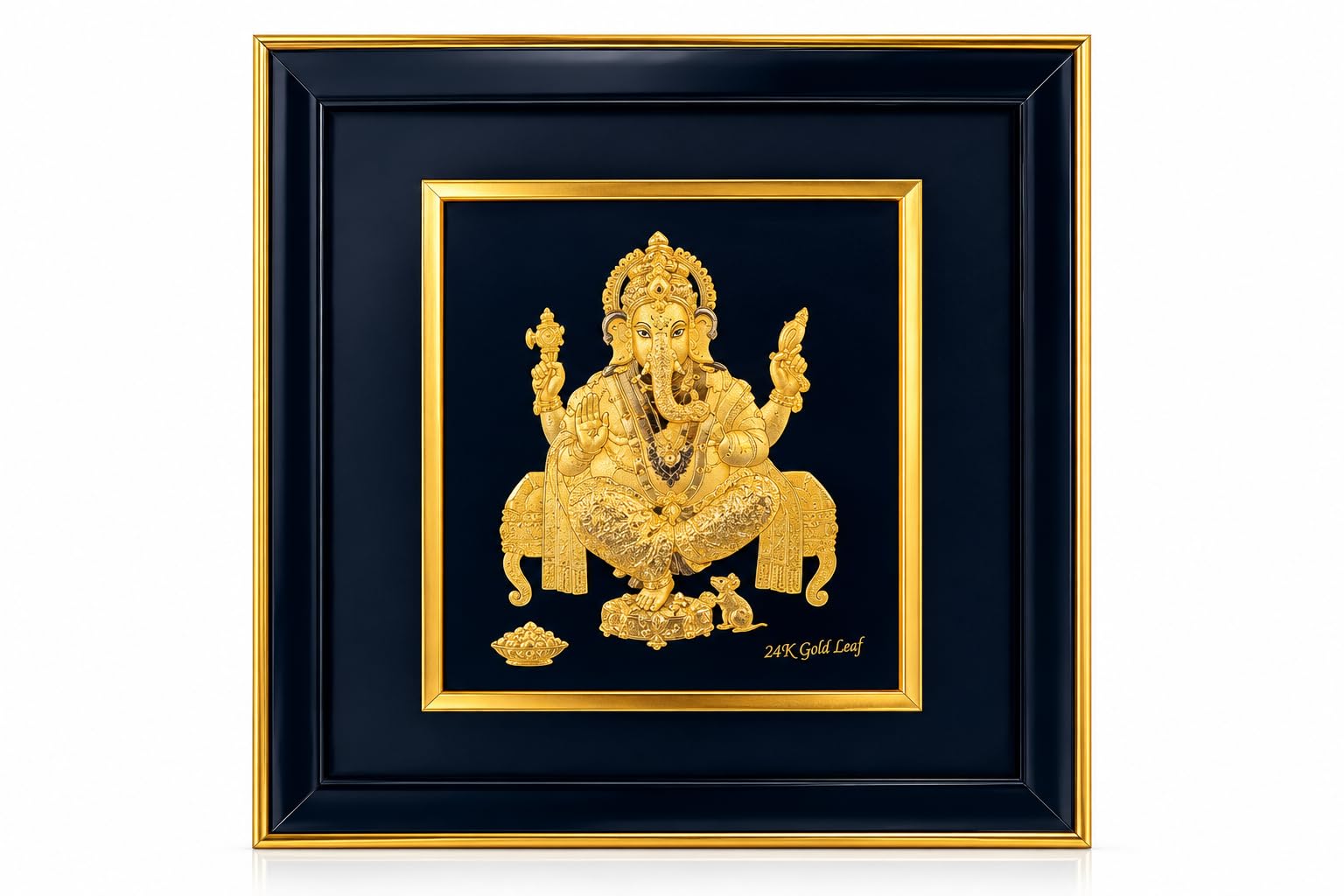
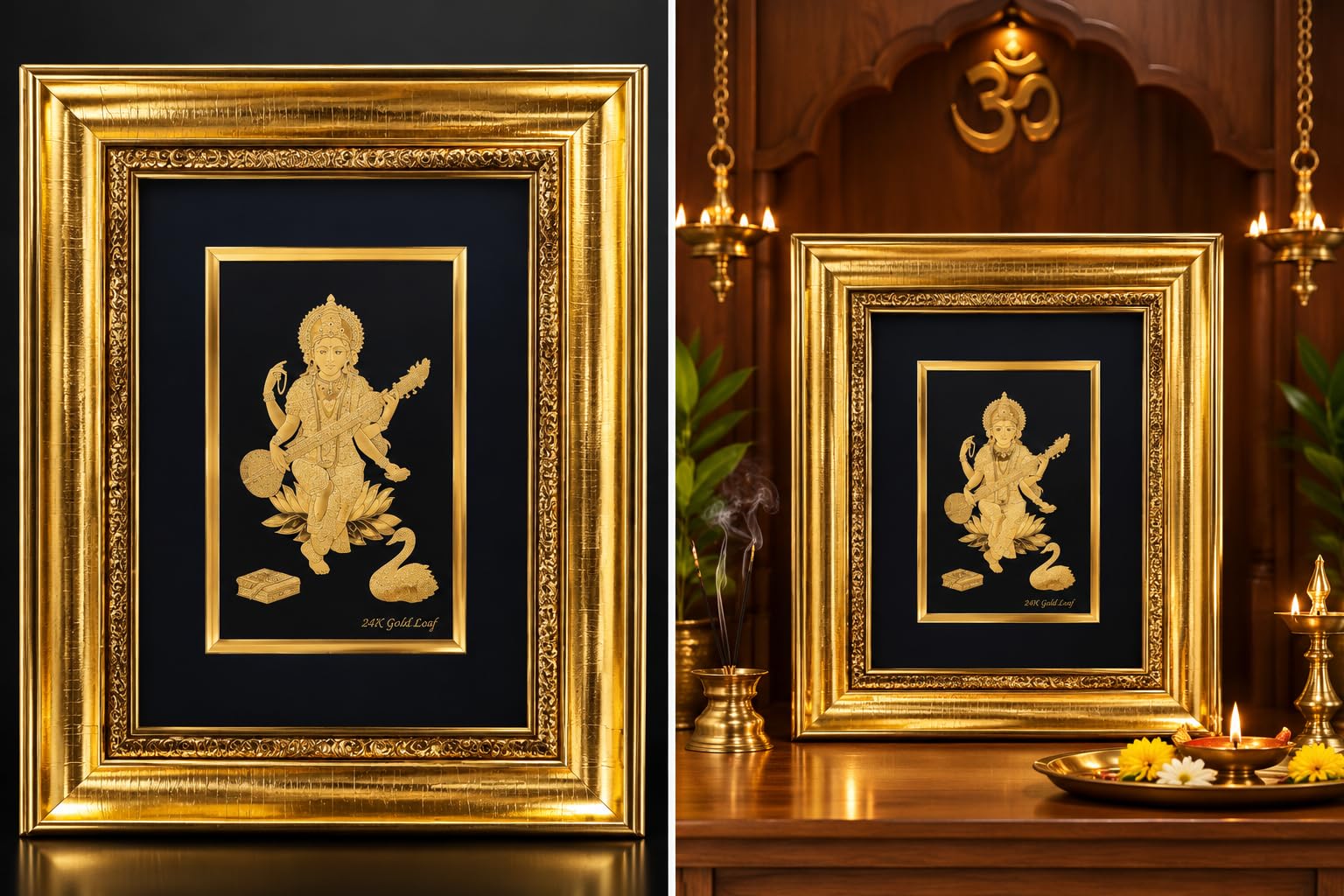
If you want the finished look without making the piece yourself, Praneer offers ready-made pieces with genuine gold detailing. The 10x8 Lord Ganesha 24K Gold Leaf Framed Painting features gold leaf work on a black background with a built-in tabletop stand. For a Saraswati piece, the 10 x 8 Goddess Saraswati 24K Gold Leaf Art Frame, Black & Gold offers the same gold-on-black contrast in a carved gold-finished frame.
How to Use Gold Leaf on Acrylic Painting, Step by Step
- Prime and paint the base. Apply a smooth layer of acrylic paint in the background color. Let it dry fully, usually at least an hour.
- Mark the leaf area. Sketch the shape you want to cover with a pencil, lightly.
- Apply size. Brush a thin, even layer of gold size or adhesive over the marked area. Wait until it becomes tacky, typically 15 to 30 minutes, following the product instructions.
- Lay the leaf. Place a sheet of leaf or foil over the tacky area. Press gently with a soft brush.
- Remove excess. Brush away loose pieces. Patch small gaps with extra leaf.
- Seal the surface. Apply a gloss varnish or water-based sealer over the metal. This step is critical for brass and copper.
- Let it cure. Allow the sealer to dry fully before handling or hanging.
Watch out: Skipping the seal is the most common mistake with imitation leaf. Without it, brass and copper can darken within weeks.
Choosing Your Gold Leaf Piece for Your Space
Think about where the piece will hang before you choose. A bold, ornate deity painting suits a home puja room or a formal entryway. A smaller piece can work in a minimalist office, where a single gold accent stands out against clean walls.
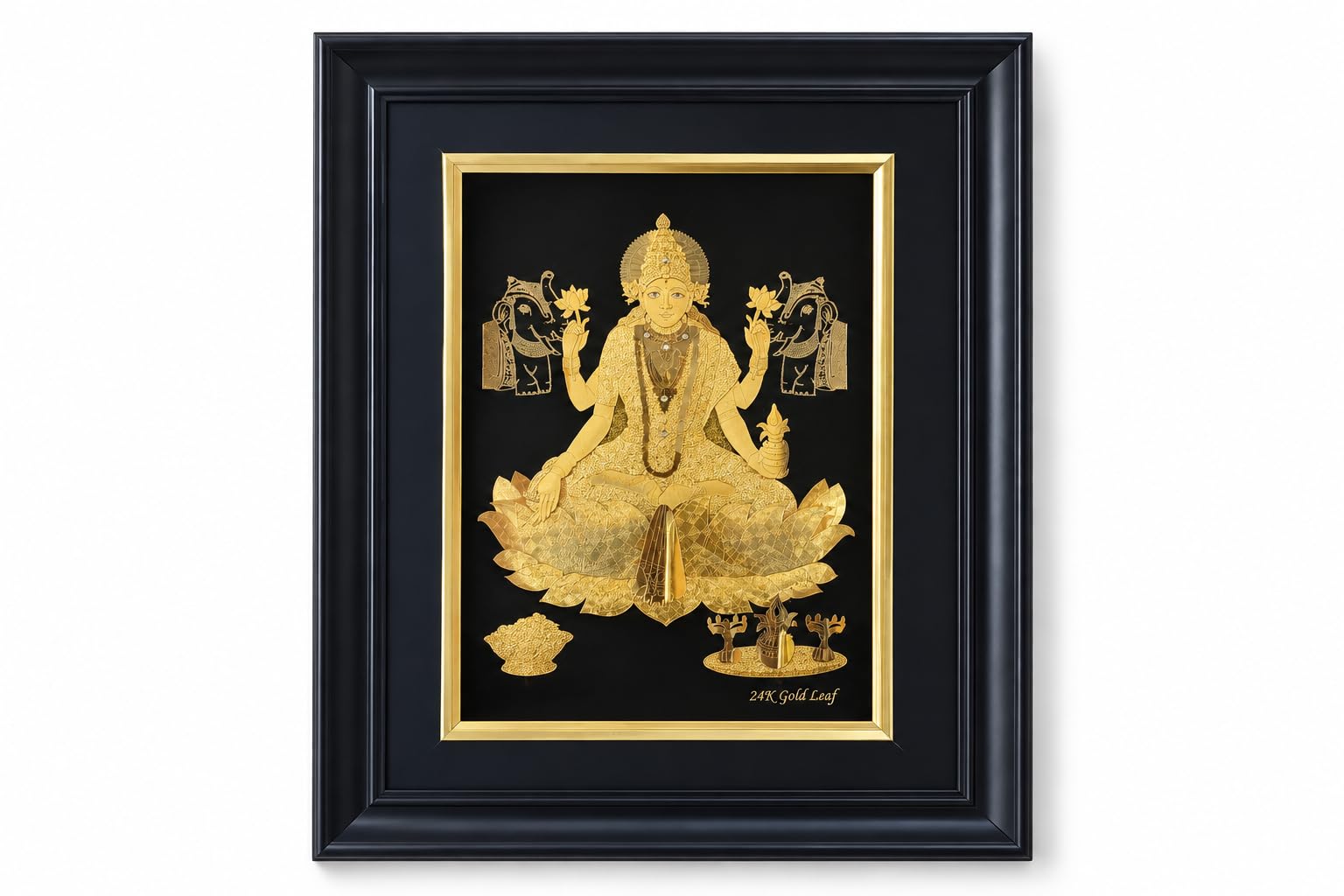
Size matters as much as style. A 10 x 8 frame suits a shelf or small wall, while a 14 x 11 piece anchors a larger space. The 10 x 8 Goddess Lakshmi Framed Art with 24K Gold Foil is suited to a compact puja area. For a clean office look, a simple framed piece in black and gold tends to fit in without clashing.
Decide whether the gold is the feature or the accent. If the gold is the feature, genuine leaf is the usual choice. If it is an accent, a well-sealed foil or brass piece can deliver similar warmth at a lower cost.
Frequently Asked Questions
What can I use as a substitute for gold leaf?
Common substitutes include brass leaf, imitation metal leaf, gold-colored transfer foil, and metallic paint. Brass leaf and imitation leaf are the closest in look and cost less than genuine gold leaf. Transfer foil is the fastest to apply but can look flatter. Metallic paint is the simplest but lacks the reflective depth of real leaf. For a framed deity piece where the gold is the centerpiece, Praneer's 24K gold leaf framed paintings are one option to compare, starting at $149.00 for the 7 x 6 Lord Shiva piece.
What is the difference between real gold leaf and imitation gold leaf?
Real gold leaf is made from beaten gold, typically 22K or 24K, and it does not tarnish, so its color stays consistent over time. Imitation leaf is usually copper or zinc alloy that is coated or colored to resemble gold, and it can dull or oxidize, especially if left unsealed. Real leaf costs more but holds its brightness. Praneer's framed pieces use 24K gold leaf or 24K gold foil detailing and are priced from $149.00 to $309.00.
How do you use gold leaf on an acrylic painting?
Start by sealing the acrylic surface so it is smooth and not absorbent. Apply a water-based size or adhesive to the area you want to gild, wait until it becomes tacky, then lay the leaf sheet over it and press gently with a soft brush. Brush off the excess and seal the finished area with a varnish, because unsealed leaf can tarnish. Work in small sections and allow each to dry fully before adding more.
Is there paint that looks like gold leaf?
Metallic and gold-toned acrylic paints can mimic the color of gold leaf, but they usually lack the flat, reflective brilliance of true leaf. Gilding wax and metallic pigments give a warmer, more textured effect. For the most authentic shine, real gold leaf or fine gold foil remains the closest match. Praneer's pieces combine 24K gold leaf detailing with black or burgundy velvet backgrounds.
